

From the Trading Floor to the Film Set! How Kim Lloyd Co-Founded Bloodaxe Studios
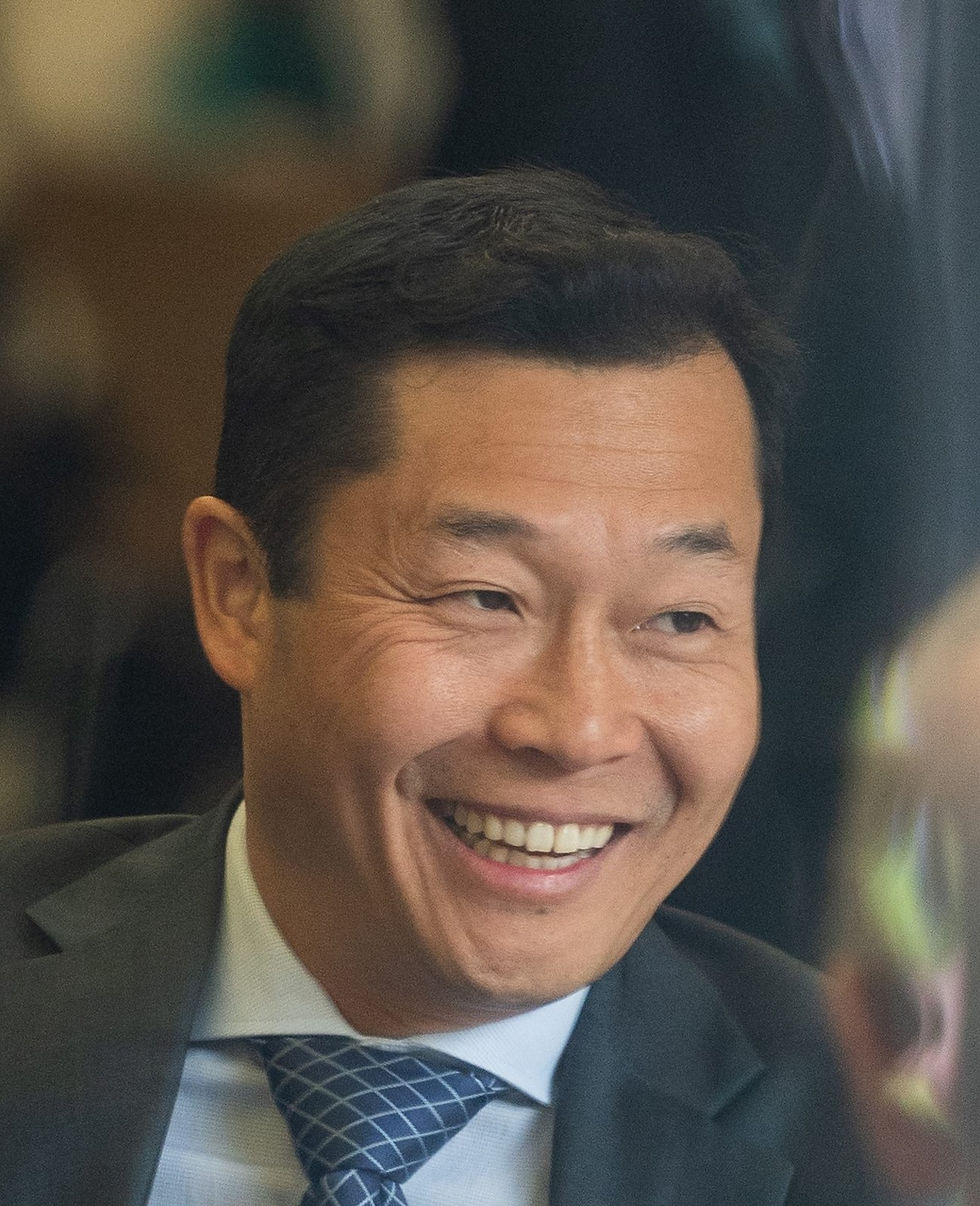
Some encounters change the course of your life in ways you could never predict. This is the story of two strangers who met 26 years ago, just as they were beginning their careers in London and searching for somewhere to live. It all started with a terrible room in Shepherd's Bush, West London, a place neither of them would have chosen if they had other options. Sometimes, the most unlikely circumstances create the greatest opportunities. This is a story about how life has a way of bringing people together when you least expect it.
Today we're speaking with Kim Lloyd, who made an unusual transition from a successful career as a senior energy trader to co-founding Bloodaxe Studios. We'll explore why he left the trading floor, how the studio was built, and the vision behind creating commercially successful British films.

Kim Lloyd Linkedin 
Kim Lloyd IMDB
Background
GridMarkets - Tell us about your career in energy trading, Kim.
Kim - I started as a graduate in operations, I then moved onto the trading floor as a junior trader and worked my way up to senior trader, head of desk and eventually head of department and on the management board.
GridMarkets - What was your role?
Kim - I was in charge of proprietary trading and asset optimisation. I traded the European electricity markets which included Germany, France, UK, Switzerland, Austria, Czech Republic and Denmark. This involved analysing the market and managing risk to take speculative trading positions, as well as optimising the parent company assets.
GridMarkets - What did you enjoy most about that world?
Kim - I loved the dynamic and fast paced nature of the market, the competition and getting it right. No two days were the same even if fundamentally, you were doing much of the same things day-in day-out. Every day was a challenge and at the end of every day you knew if you had won or lost.
GridMarkets - Trading and filmmaking seem like completely different industries. Are they really?
Kim - The core business of trading and film making are indeed very different. Trading is very black and white, fast paced and based on fundamentals, whereas I would describe filmmaking like all the colours of the rainbow; there are many different genres of film that appeal to many different people, there are no set rules. Producing a film is a long and complex process which involves many different stakeholders. Creativity in trading is limited to creative problem solving, whereas in film making it is at the core of the industry and of an artistic nature. Trading requires fast decision making and constant analysis, whereas filmmaking requires longer term planning and project management.
However there are transferable skills that I have lent into when creating our film company.
GridMarkets - Which skills from trading have been the most valuable in building a production company?
Kim - Looking back, there are several skills from my trading career that have been incredibly useful in building the studio. A few stand out in particular: analyzing the market, mitigating and managing risk, developing effective strategies, solving complex problems, staying organized, planning the business, managing personnel, and handling stress effectively.
GridMarkets - Was there a defining moment when you decided to leave trading and enter film?
Kim - No, I left trading as I felt I had achieved all the goals that I had set myself and did not want trading to define who I was.
Getting involved in filmmaking was a pure coincidence that my business partner, Neil, was looking for someone who could help him set up and run a film production company to fulfil his dream of becoming a feature film director. I was drawn to the idea as I have huge belief that he is immensely talented and creative, and I thought it would be an exciting journey to go on with him.
The Birth of Bloodaxe Studios
The Idea
GridMarkets - Where did the idea for Bloodaxe Studios come from?
Kim - Neil has always wanted to be a feature film director, and having spent many years in various roles in the media industry, but never as a film director, Neil decided it was time that he made the transition. Neil realised that he could not single handedly try to finance and make films, he needed a business partner to help him. After agreeing to join him on this endeavour, I set about creating a credible business plan that could attract investment to make it possible.
GridMarkets - Why did you decide to build a production company rather than simply invest in films?
Kim - In my view it was the best way to assure long-term financial success, and the best way to attract investment.
GridMarkets - What vision did you have from day one?
Kim - I want to build something scalable and profitable, not a one film flash in the pan.
"I want to build something that can grow into a fully fledged studio that can one day rival the Hollywood studios"
GridMarkets - What is your current vision for the company?
Kim - We are a new, innovative British film production company that is re-imaging how films are financed and made. We want to make exciting, quality, commercially successful films based on rich story telling with breathtaking visual and audio production.
We want to build our company organically into a vertically integrated studio, by bringing along exceptional talent that are highly motivated and excited by what we are doing.
We want to be a leading driving force within the British film industry, the go-to place for film making and wider media production.
The First Steps
GridMarkets - What were the first practical steps?
Kim - When I agreed to embark on this journey with Neil, I told him that having no experience in how the media industry works, the first thing I needed to do was understand how films are financed, made and sold.
I therefore did a lot of research into the history of the industry. How it evolved, the highs and lows and how it works practically today. I also researched how to set up and run a startup company.
GridMarkets - How many founders were involved?
Kim - Just the two of us. We have been the driving force behind this from the beginning. Neil is the creative director and I am the business director.
GridMarkets - How many people were on the team initially?
Kim - We are still the only two co-founders, although we have recently taken on board a head of legal and business affairs.
GridMarkets - What were the biggest challenges during the first year?
Kim - Learning the complexities of setting up and running a startup company.
Creating the financial statements for the business plan.
GridMarkets - Was raising capital more difficult than expected?
Kim - No it actually went quite smoothly, despite not having raised the full amount intended. I am shortly going to go back into the market to try to raise the remaining funds we need to run the company for two years and make our second film. I am fortunate that I have a good network of high net worth individuals.
GridMarkets - What surprised you most about the film industry?
Kim - The amount of costly intermediaries that make it very hard to make a profit for small independent film makers.
The Supervoid Universe and the First Feature Film
The Supervoid Universe
GridMarkets - Could you provide a brief overview of the Supervoid Universe?
Kim - Neil created the IP, the world and then the structure.
Supervoid: https://www.bloodaxestudios.com/supervoid


Supervoid III - more to come!!!
Follow Bloodaxe studios!

Linkedin Bloodaxe Studios 
YouTube Bloodaxe Studios 
Instagram Bloodaxe Studios 
X Bloodaxe Studios
Developing the Project
GridMarkets - Tell us about your first feature film.
Kim - It is a family-friendly, action-adventure film.
A small-time thief on the run with a stolen rune-powered artifact stumbles into a remote mountain village where a fanatical Norse cult, a coldly charming mercenary, and a shadowy megacorporation all want him for the same reason — he alone can wake gods that have slept for a millennium. Rune: Supervoid 1 is the first chapter of a mythic action-thriller — First Blood through the lens of The Wicker Man, scored against a brooding mountain landscape with the texture of dark folklore.
GridMarkets - What is the title?
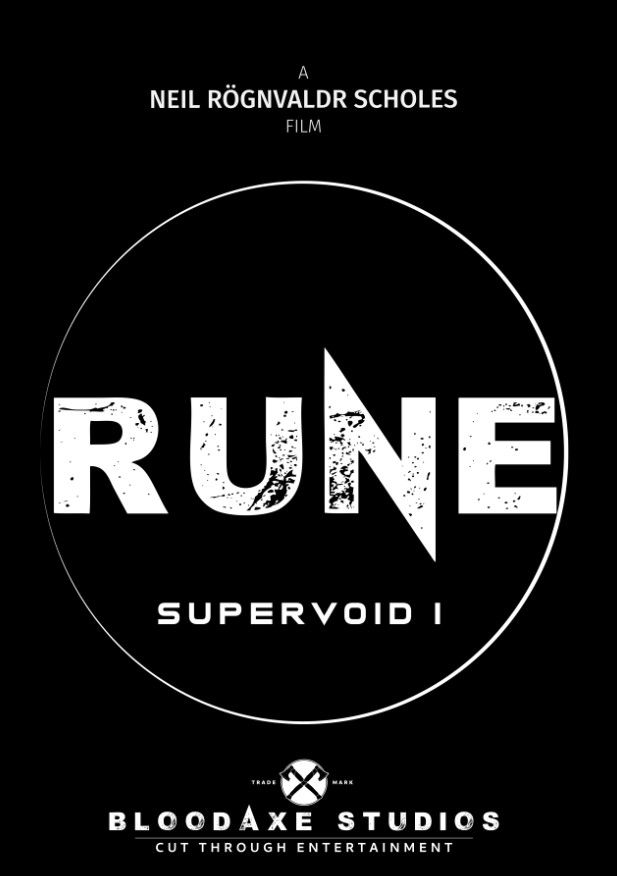
Kim - Rune Supervoid I

Rune - Supervoid I - Coming soon 
Rune - Supervoid I 
Rune - Supervoid I 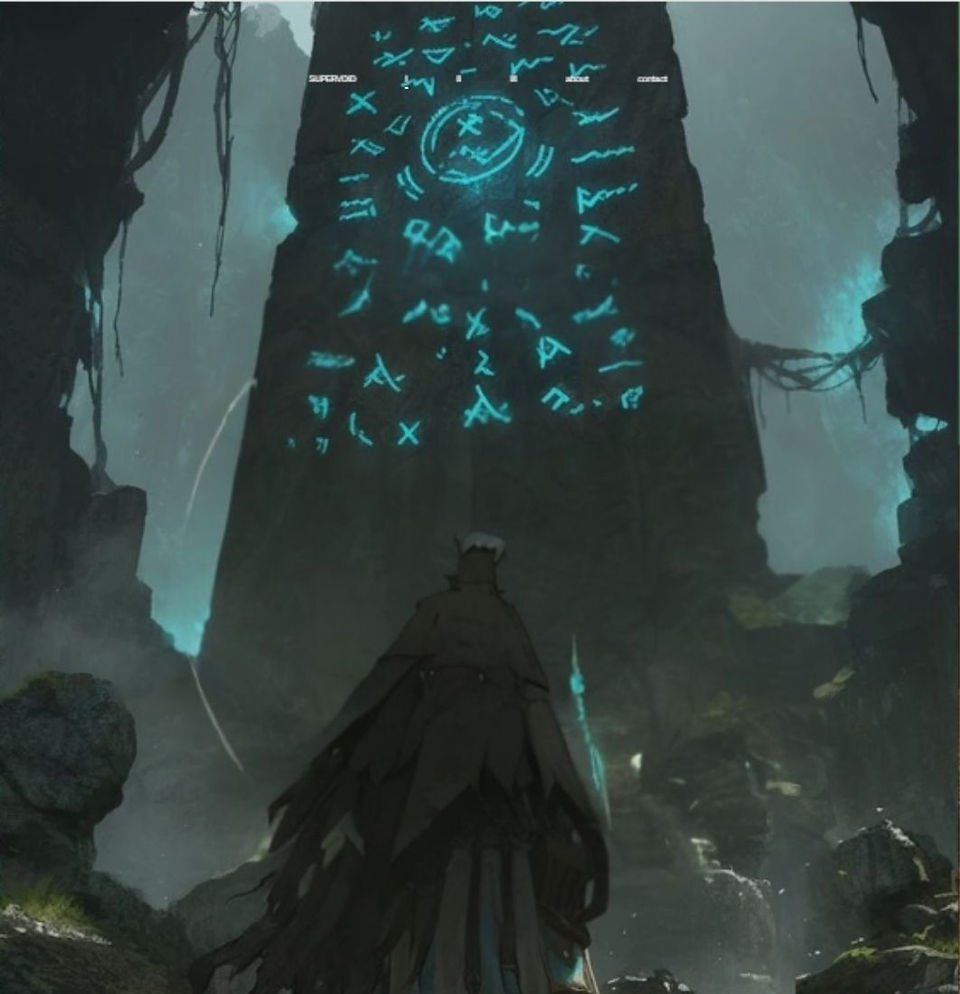
Rune - Supervoid I 
Rune - Supervoid I 
Rune - Supervoid I
GridMarkets - Why did you choose this story?
Kim - We wanted to make films that appeal to a wide audience in the action-adventure genre that Neil and I both enjoy watching.
We feel that there are not enough good quality action-adventure films being made and none in the UK.
GridMarkets - How long did development take?
Kim - 18 months
GridMarkets - How did you finance the production?
Kim - The parent company is financing the film by attracting private equity.
We managed to attract investment from my angel network using the tax advantageous HMRC Seed Enterprise Investment Scheme (SEIS)and Enterprise Investment Scheme (EIS).
The investors have been attracted by the strong commercial appeal of the film as well as the vision for the growth in the business.
Production
GridMarkets - Where was the film shot?
Kim - in Norfolk
Norfolk cave Norfkolk 1 Norfolk house Norfolk lake Norfolk forest Norfolk cave 2
GridMarkets - What made those locations attractive?
Kim - There is an amazing full production services studio in Norfolk that specialises in delivering services for High End Television (HETV), e.g., location services, camera, sound, lighting, logistics, etc as well as independent films of all budgets.
We believe that by working with them we will be able to get a very high production value at a fraction of the cost of other studios or trying to bring all the moving parts together ourselves.
GridMarkets - Which actors are involved?
Kim - The cast includes names recognisable to genre audiences!
Chandler Riggs (The Walking Dead)
American actor best known for playing Carl Grimes on AMC's The Walking Dead from 2010 to 2018, a role that earned him three Saturn Awards. He's since taken on film roles including Only, Inherit the Viper, and a recurring part on A Million Little Things.

Chandler Riggs 
Chandler Riggs
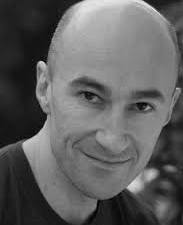
Ross Mullan (Game of Thrones)
A Canadian-British actor and puppeteer known for portraying White Walkers on Game of Thrones across its second to fourth seasons. He's also known for physical and creature work in Doctor Who and Clash of the Titans.
Ross Mullan 
Ross Mullan
Tina Gray (A Castle for Christmas)
A Scottish actress with decades of stage and screen experience, known for roles in A Castle for Christmas alongside Brooke Shields, plus appearances in Maleficent: Mistress of Evil and Crooked House.
Her career spans over 60 years, including more than 400 stage appearances and 1,500 BBC radio plays.

Tina Gray 
Tina Gray
Kayleigh Gilbert (Winter: Battleground)
Plays Alex in the 2026 sci-fi thriller Winter: Battleground, alongside Donald "Cowboy" Cerrone and Johnny Messner. She's also known for roles in Don't Look Deeper, Reborn, and There Is Many Like Us.

Kayleigh Gilbert 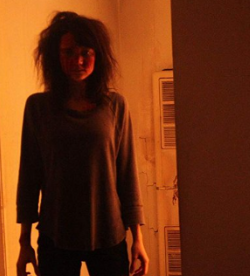
Kayleigh Gilbert
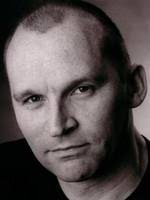
Ben Shockley (Dan Hawk Psychic Detective)
A British actor, writer, and director who wrote, co-directed, and starred in the lead role of Dan Hawk Psychic Detective (2024). He's also appeared in films including Vendetta with Danny Dyer and Instant Death alongside Lou Ferrigno.
Ben Shockley 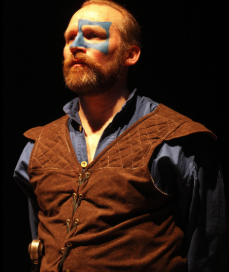
Ben Shockley
Paul Kavanagh (The Wastelander Sector 23)
Co-wrote and stars in the 2024 short film The Wastelander: Sector 23, alongside Graham McTavish (House of the Dragon, Outlander, The Hobbit). He's also known for a role in Dracula Untold.

Paul Kavanagh 
Paul Kavanagh
GridMarkets - How did you approach casting?
Kim - It happened organically, we first started by reaching out to Neil's network.
Chandler and Kayleigh were as a result of a 'get to know you' chance meeting at the Berlinale film festival in 2025. We clicked and stayed in contact. Tina was suggested by the head of the Art department.
GridMarkets - Were established British actors important for attracting audiences and investors?
Kim - To some degree yes.
How globally recognizable they are is always an important factor, but the realities of independent micro budget film making means that you don't usually have access to Hollywood A listers. What has become more important to us, is the actors' talent and motivation. We want to work with actors who are truly excited to be part of our films and vision, who are passionate.
Results
GridMarkets - How has the film been received?
Kim - We are still in pre-production stages, but the feedback from the sizzler we made received very positive comments from sales agents and distributors that we showed it to in Cannes last year (in May 2025).
GridMarkets - What has been the biggest success so far?
Kim - Binging onboard the investors, and all the on-screen as well as behind the camera talent. We have brought on board a lot of world class professionals that truly believe in what we are doing.
GridMarkets - What lessons have you learned from producing your first feature?
Kim - It is hard work, there are so many moving parts that you need to align to make it work.
Do not underestimate the amount of work and the time it will take you to do it.
Don't leave anything to chance, make sure that you have considered everything.
"You must be a problem solver with a 'can do' attitude."
What's Next?
The New Production GridMarkets - You're preparing another film for pre-production in April 2027. Can you tell us about the project?
Kim - It is called Vanir and is a sequel to Rune.
It is part of the same Intellectual Property (IP) and franchise that we are building
Vanir - Supervoid II is the next chapter in the story. It will introduce new characters and exotic visions to uncover more of the exciting world of the Supervoid.
GridMarkets - Without giving away spoilers, what's the story about?
Kim - The audience is drawn further into the world we are creating and begins to understand the significance of the power of the Runes.
Vanir - Supervoid II continues the exciting adventures of Walter Isolde, a once small-time thief but now a magical RUNE DEMON, who joins a secret order of paladin knights called the VANIR, sworn to protect the sorcery of the gods. Upon connecting with an ancient power Walter must learn of his ignorance in order to find true wisdom.
GridMarkets - How does this project differ from your first film?
Kim - The dramatic theme of the story changes significantly; in the first film the hero must find the courage to embrace the unknown - whilst in the second film the hero learns the meaning of hubris, wielding a power beyond his understanding.
GridMarkets - Has the scale of production increased?
Kim - Yes, it will be approximately double the budget, at the minimum, of our first film. If we attract further direct investment into the film or the first film Rune is very profitable we will increase the budget to a level that is sensible and sustainable for our long term ambitions.
Financing Independent Films
Finding Investors
GridMarkets - What type of investors are you looking for?
Kim - So far we have attracted angel investors from my network of friends. I am still working on attracting further investment from this network.
I am also now reaching out to angel investor groups, who are specifically looking for investments that fit their investment criteria. As they are not personally known to me it is harder to get in front of them. And as they don't know me personally, more work needs to be put in to convince them that we have what it takes to be successful.
The next stage will be to approach institutional investors. These investors tend not to come in at pre-revenue stage, and have very stringent investment criteria. The process of negotiation with them can be extremely long and drawn out, but it can lead to significant levels of investment.
GridMarkets - Why should someone consider investing in independent film?
Kim - Like all investments they carry significant levels of risk, however I would consider independent film to be on the higher side of high risk, due to the failure rate of this sector. So to convince your investor to come on board, you need to have a great concept/IP, and have credibility that you can deliver it on time, on budget and it has a good chance to make a profit. Thus giving them the opportunity to invest in a film that has a realistic chance to be a big success.
Most film investors will want to feel like the upside to their investment is as high as the risk is.
Some film investors will do it out of personal interest in the project or for romantic ideas of the film industry and wanting to be in some way involved. But I would say that finding and accessing this extremely small and niche portion of the population is like finding a needle in the haystack.
GridMarkets - What makes Bloodaxe Studios different from other production companies?
Kim - It is a powerful combination of business acumen and know-how and creative vision, technical knowledge and experience.
It has grand ambitions and a realistic plan on how to achieve them.
GridMarkets - Are investors looking for financial returns, creative involvement, or both?
Kim - Invariably financial returns, but some do like creative involvement. But I would be wary of the latter, as creative involvement can create friction. Many will like the added bonus of investing in an industry that is deemed very glamorous.
GridMarkets - How do you build confidence with first-time film investors?
Kim - Credibility. You need to show them that you know what you are doing and have the experience and knowledge to back it up.
The UK Film Tax Incentives
GridMarkets - The UK offers attractive tax incentives for film production. Can you explain how these incentives work?
Kim - Before I explain the tax incentives for film production I will tell you a little about the HMRC Seed Enterprise Investment Scheme (SEIS) and Enterprise Investment Scheme (EIS) tax incentive schemes. The UK government has recognised that the driving force behind the economy are not the large multinationals who are looking for efficiencies, but today's fledgling startup companies that will become the large multinationals of tomorrow.
However, startup companies are very high risk investments as they have a significant failure rate.
To incentivise investors to take the risk to invest in these companies, the government has created the tax-advantaged SEIS and EIS schemes. Investors into SEIS can offset 50% of their investment against their income tax bill, up to a maximum investment of £200k. And investors into EIS can offset 30% of their investment against their income tax bill, up to a maximum investment of £1m.
Should their investment fail, they can further offset the remainder of their investment against their income tax at their highest marginal income tax rate.
This means that for an investment they are effectively only at risk for 27.5% for SEIS and 38.5% for EIS if they are an additional tax rate payer. On the other hand, should the investment prove profitable, it is capital gains tax free, which is a 24% upside compared to other investments.
It is also excluded from Inheritance Tax (IHT). If the investment is made from Capital Gains Tax (CGT) gains, it can also attract additional tax benefits. But you must hold the investment for a minimum of three years, or risk losing all the tax benefits.
Finally, HMRC is very strict on what type of film production company can qualify for this scheme and so you must get advance assurance from HMRC for your film production company, as not all film production companies will qualify. Single film production will not qualify for the SEIS or EIS schemes.
The UK tax incentive for film production falls under the Audio Visual Expenditure credit (AVEC) scheme, which covers High End TV, Gaming and feature films. For independent films with budgets of maximum £23.5m they qualify for Enhanced AVEC, also known as Independent Film Tax Credit (IFTC)
The headline rate is a 53% rebate on your production costs. However, this is limited to 80% of UK core expenditure and a limit of £15m. This is then subject to corporation tax which reduces the headline rate to 31.8%
There are also AVEC rates that apply to big budget films at a lower 39% rate, as well as specific VFX incentives as well as Gaming.
"Please note that this does not constitute tax advice, I am not an accountant, and your own personal tax advice should be sought."
GridMarkets - Why do they make the UK such an attractive place to produce films?
Kim - The UK tax rebates are amongst some of the most generous in the world. This combined with the depth and breadth of talent that exists in the UK, make it a very attractive place to bring production.
This is because the government recognises the importance of the media industry to the UK economy, and wants to attract more investment into the sector.
GridMarkets - How do they help reduce investment risk?
Kim - Depending on how you structure your investment, you can promise to return to the investor the tax incentive as a guaranteed minimum return alongside all the upside of selling the film.
This cannot, however, be done under SEIS/EIS. As the SEIS/EIS investors already benefit from the tax incentives of these schemes which reduces their risk at source.
Building Films for an International Audience
Audience
GridMarkets - Who is your primary audience?
Kim - English speaking 12-45 year olds, who enjoy family-friendly, action-adventure films.
GridMarkets - Are your films designed mainly for UK audiences or for international markets?
Kim - International.
However as we are a UK based film production company, it will be easier for us to penetrate the UK market first.
The US market is the largest English speaking market, so it is clearly one that we want to break into. We have an American lead actor, which we hope will help with this.
GridMarkets - How important is it to cast recognised British actors?
Kim - The more recognisable they are the higher the marketing budgets from the sales agents and distributors the film will get. This all then increases its chances of success.
GridMarkets - Does casting influence international sales?
Kim - Yes, having recognisable cast that are specific to the targeted audience/regions, the better.
Distribution Strategy
Getting Films to Market
GridMarkets - Once a film is completed, what's the strategy for distribution?
Kim - Our aim is to partner with a top class British film distributor who has an international presence.
This is to centralise the cost and to have a unified, global strategy for release.
If we fail to attract the right distributor who will do a fair deal, we will consider going down the far harder but potentially more profitable route of self distribution.
GridMarkets - Are you targeting cinemas, streaming platforms, or both?
Kim - Definitely both.
We want to have a theatrical release. That raises the profile and gives the film more prestige, publicity, reviews, and visibility. This all helps to make streaming platforms more likely to want to acquire the film and lead to better licensing deals.
Once we have had our theatrical run, we will want to sell it to a streamer.
GridMarkets - What role do platforms like Netflix, Amazon Prime Video, or Sky play?
Kim - As they are some of the largest platforms they are hugely important. They will provide the platform to reach wide audiences. However, you need to be careful of the deal you sign, as they often ask that you sign over the IP. This is a big red line for us.
The IP is the most valuable asset that your film production company has, and you want to protect it at all costs.
GridMarkets - How do independent studios secure distribution deals?
Kim - With difficulty. It is all down to the quality of the project.
How good the film is, what talent is attached, and what genre it is.
And how much hype have you managed to generate? E.g. festival awards, social media, etc.
GridMarkets - What does a successful distribution pipeline look like?
Kim - To be honest, this is something we still have to figure out. As we are a brand new film production company and have not yet released our first film, I can't give you specifics.
You ideally want a strong distribution strategy that maximises all the revenue streams. Starting with theatrical release, to Transactional Video on Demand (TVOD), to Subscription Video on Demand (SVOD), to Advertising Video on Demand (AVOD), to physical and broadcast.

GridMarkets - Do you see Bloodaxe Studios mainly as a film production company, where each film is treated as a standalone project (for example, producing a single film like The Revenant as a one-off story), or as a studio focused on building long-term intellectual property through stories and characters that can be developed into franchises (for example, building something like the James Bond series, where the same characters and world continue across multiple films)? Kim - Definitely the latter. Our IP is based on an inter connected universe that we intend to build out into a franchise. In this way we can build up a loyal audience.
Final Thoughts
GridMarkets - Before we wrap up, is there anything we haven't covered that you'd like to share about your journey or the project?
Kim - It is a long, hard journey, that is not for the faint hearted.
But it is equally an exciting and fun journey that I believe will be hugely rewarding, not just financially but also through enjoyment and satisfaction.
Make sure that you build a good team around you.
"People are the key"
They must be as driven, motivated and excited as you are. They must also have the talent to deliver at the level you want to be working at.
GridMarkets - What are you looking for and hoping to achieve in the future
Kim - We want to build a vertically integrated studio that consistently produces commercially successful blockbuster films.
We want to bring on board motivated and talented people who are excited to come on the journey with us.
GridMarkets - What are your next steps on the journey?
Kim - Bloodaxe Studios is in pre-production of its first film which will be ready early next year. Stay tuned!!!
A new story is forming behind the scenes, we are already working on the script for our second film.
Be part of the journey from script to screen, follow us as we will shortly be sending out teasers and updates on how our journey is unfolding, with sneak previews and behind the scenes making of.
"Bloodaxe Studios is just getting started, we have huge ambitions to grow and make blockbuster films, watch this space!"
GridMarkets - What would you like to say to potential investors?
Kim - For investors interested in learning more about Bloodaxe Studios or discussing investment opportunities, we'd be delighted to hear from you.
The UK continues to offer one of the world's most attractive environments for film production through its competitive tax incentives, world-class crews, and internationally recognised talent.
For enquiries, please contact Kim at info@bloodaxestudios.com
Website: bloodaxestudios.com
Thank you for joining us, Kim, and sharing your journey from the trading floor to the film set.
By GridMarkets Marketing


Comments