

From VFX artist to producer: Neil Scholes' journey to co-founding his own independent film production company
Interview with co-founder and CD Neil Scholes

Neil Scholes is a screenwriter, director, producer, VFX supervisor, and filmmaker, now co-founder of Bloodaxe Studios with Kim Lloyd , a new independent film production company.
A versatile creative leader and problem‑solver, Neil works across film production and digital VFX.
He has produced and led the creative for TV and commercial brands, including the BBC, National Geographic, Netflix, Disney, Ford, Sony, Coca-Cola, Vodafone, Virgin Atlantic, EE, Apple, Mercedes Benz, Jägermeister, McDonald’s, Dell and Sky Television.
Neil is currently developing the Supervoid IP franchise, with feature films planned to begin production in summer 2026.

Neil Scholes Linkedin 
NEil Scholes IMDb 
Neil Scholes Vimeo

What inspired you to transition from VFX work to developing your own original content?
After working extensively in advertising and VFX, I realized I needed to transition into developing and producing original IP. Production restrictions from COVID highlighted to me the sheer amount of talented VFX people in the UK - that could easily galvanize to produce original animations and films, yet were being wasted and unused. It seemed to me that the culture and entrepreneurial ambition to act independently just wasn't readily available and therefore a lack of work from the US meant everything in the UK shut down. In addition to this, sometime later a friend of mine suddenly told me about his incredible journey making and distributing an independent feature film version of the War OF The Worlds by HG Well. I was so impressed and inspired by his accomplishment that I decided to shift into gear and go for it myself.
How did you approach making your first independent films?
So I decided to make a move and focus on how to start making feature films. I actually started by thinking strategically about how to shoot films for micro budgets, and set about making a series of experimental short films purely from the perspective of practical problem solving so that I could prepare in some way for scaling up to a 90 minute film.
I realized the first thing I needed to do was make a 10 minute film of pure dialogue - 2 actors talking in a room. After all most films involve people talking, and although I had made many promos and commercials as a director I had never actually just made a 10 minute film of dialogue. THE STUNT was shot in about a day. It was written by my friend and for me it was a chance to shoot, light, block and direct 2 actors - then edit that material to hopefully hold an audience's interest for a gripping 10 minutes. I shot it on my iPhone and finished the film in Resolve. I did everything, including the edit, titles and grade and I ended up not only enjoying myself immensely but also quickly realized that I could simply scale the experience and cost of making THE STUNT by 9 times and that would roughly equate to being a feature film of 90 minutes.
However, being interested in action and adventure I also knew that I couldn't make a feature film of just people talking in a room, and so I decided to make a second short which was an action sequence, Basically I wanted to know what it would take to shoot an action sequence with zero resources. DEMON was written and again shot by me on my iPhone in about 3 hours on a beach in Kent. It was essentially a 5 minute sword fight choreographed by my friend. Again it was a wonderful experience and taught me a lot about the reality of doing physical action especially with no money.
Tell us about founding Bloodaxe Studios.
The next step for me was figuring out how to navigate the minefield of independent film finance and distribution. So I reached out to my old friend Kim Lloyd and after some discussion about the possibilities of independent film production together we set up a new company BLOODAXE STUDIOS.

Kim comes from a very different world to me - the world of finance, trading and investments. I come from the world of film making - and together we have a strong partnership and make a great team - me on the creative side and Kim on the financial side. We created Bloodaxe Studios to develop and produce commercial action and adventure films in the UK.
We knew that we needed to find the finance to make films and also meet distributors to sell them. Film distributors are the route to market for films, the buying and selling of films on the global markets. If you can sell your films to markets you can then in theory then raise the finance to make them. But before all of this we needed a calling card - a short film that showed our style, ability and sign of what we were aiming to make.
What is Supervoid and how does it fit into your strategy?
The short film Supervoid was one of our first key elements in our strategy.. A film to demonstrate our style and potential as a company.
I originally shot Supervoid as a commercial portfolio piece for the advertising world. However, I now realized that I could re edit the film and redesign its intent to act as a teaser for the exciting new projects and IP coming from Bloodaxe Studios.
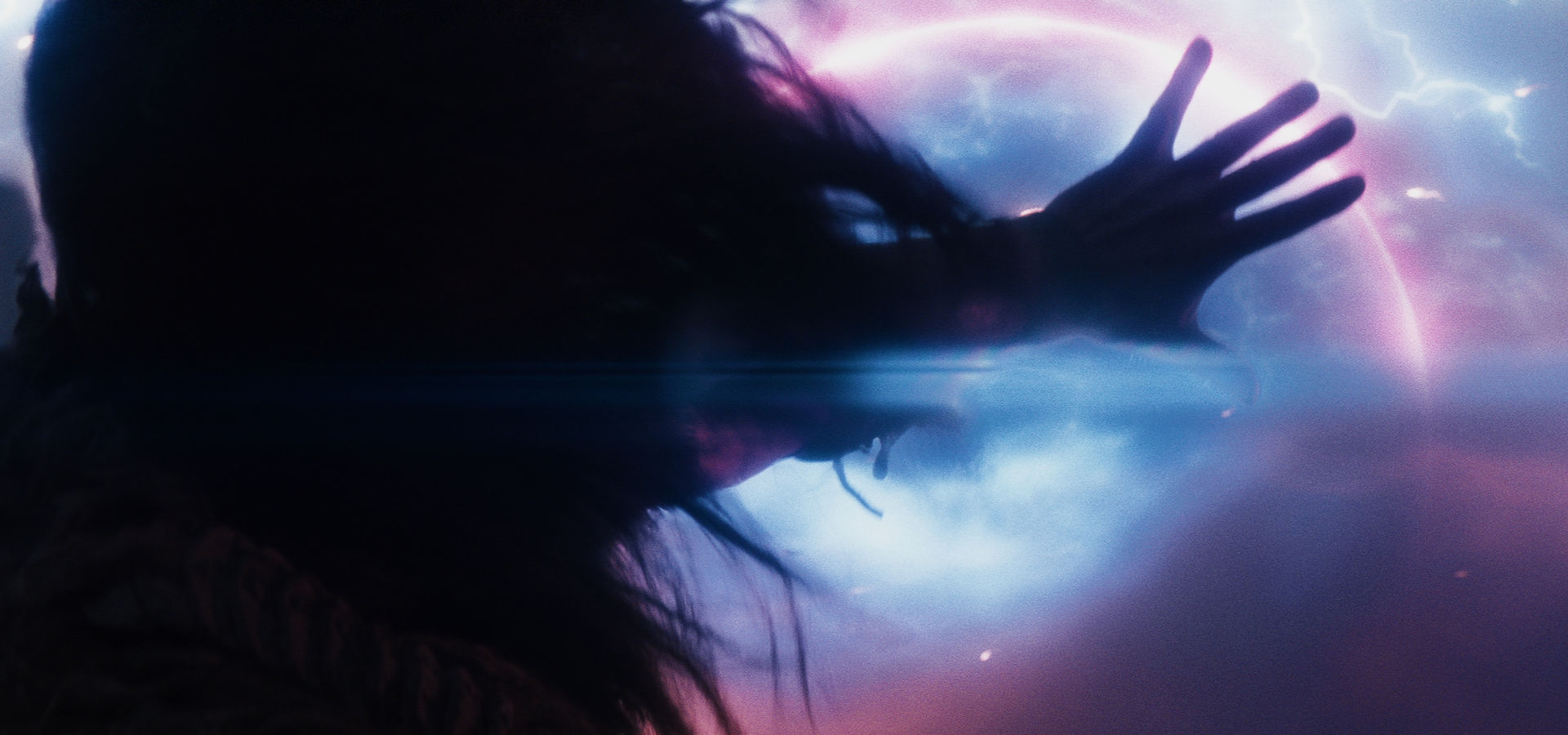
Making Supervoid was an incredible and intensive period of my life. It was shot on 35mm anamorphic film and is entirely about creating a cinematic world and showing the fun of experiencing adventure through both a child's eye and that of an ancient savage warrior. Supervoid was a massive VFX challenge and required me to learn Linux, 3D Equalizer, Houdini, Nuke and Resolve.
Inspirational look behind the scenes!
I’m excited to share some of my shots captured live on the shoot and give you a peek behind the scenes of the filmmaking process.

Shoot photos 
Shoot photos 
Shoot photos 
Shoot photos 
Shoot photos 
Shoot photos 
Shoot photos 
Shoot photos 
Shoot photos 
Shoot photos 
Shoot photos 
Shoot photos 
Shoot photos 
Shoot photos 
Shoot photos 
Shoot photos
You’ll get to see the challenges we ran into on set, how we dealt with delays, and the fun, motivating atmosphere that kept our team going.
A real look at what happens behind the camera.
For more action, check out https://www.youtube.com/@BloodaxeStudios
How did GridMarkets help you with creating Supervoid?
I did all the VFX myself and crucially used GridMarkets for the post visualization. After you spend time developing the FX in Houdini you then need to actually simulate and render versions of shots and incrementally adjust timings and animations in the context of the edit. You have to find the right balance of elements to tell the story and I regard this process as post viz which also crucially allows you to find preliminary render settings and render passes to start building early comps in Nuke. It's a lot of iterations and tests.
Using GridMarkets helped me push through the data and allow me to make headway.
What's your philosophy on VFX artists becoming generalists?
To approach the VFX on a short film in this way you have become a generalist in nature, not a specialist, but rather an artist that can wear many hats and who refuses see the division between 2D and 3D. Basically you need to have more of a filmmaker's approach to VFX. In reality shooting, editing, animation and compositing are all really the same thing, at least from an artistic goal. In the future I believe that generalists will be needed more than ever to pull together films and VFX, using AI to generate the details.
Supervoid captures the tone and style of films we intend to make at Bloodaxe Studios - namely fun, action and adventure entertainment with escapism, humor and imaginative fantasy and world creation.
It also serves to act as a teaser for the feature films we are actively developing - and are starting to shoot in the summer of 2026.

Supervoid film




How did you approach the business side of filmmaking?
Equipped with Supervoid, we headed to the Berlin EFM and Cannes film markets to introduce ourselves to film distributors and sales agents, and to show the kind of films and quality we can make. Both Cannes and Berlin were a great success and started us on our journey in meeting and partnering with the right distributor and route to market.
The other side to the creative part of the business is the actual scripts - and through 2025, in tandem to finishing Supervoid, I have been developing several stories which form part of a brand new fantasy adventure IP franchise called Supervoid. In recent months I have been working on the 2nd draft to the first feature film which is also co-written by 2 other writers.
My business partner Kim LLoyd, has been working on the very important aspect of raising money. Through 2025 Kim was developing and creating a business plan, which will allow us to raise private equity investment. The business plan is a very detailed and researched document designed to show the business potential to investors, and through Kim's extensive network of high net worth individuals we aim to do our first raise in April 2026.
What are your plans for 2026 and beyond?

After our first raise we will shoot 2 films, the first starting summer 2026, and then the second film shooting in summer of 2027. After a 2 year production period we will then do a second financial raise and continue to produce another 2 - 3 feature films from 2027 onward.
It is both a very exciting and busy time.
There has always been a desire for people to be entertained, and our hope with Bloodaxe Studios is to tap into the huge market for well made, fun fantasy adventure and spectacle. The ultimate goal is to produce big budget spectacle movies to rival Hollywood - films with a commercial and creative focus - and made here in the UK.
I am certain we will make mistakes across the creative aspects as well as in the business and production, but our plan is to start small, then grow and always remain flexible and adaptive, which will allow us to survive and be successful.
The Future of VFX and Independent Film
Neil’s belief in the generalist reflects a fundamental shift in how films are being made.
As tools and production methods evolve, the traditional divisions between departments are becoming less rigid. Filmmakers are increasingly expected to wear multiple hats.
Tomorrow’s filmmakers will be hybrid creators equally comfortable directing, editing, simulating, and compositing, able to move fluidly between disciplines to serve the story. This convergence is not only reshaping creative workflows but also lowering barriers to entry, enabling independent studios to operate with a level of ambition once reserved for major productions.

Comments