

Target Winter Holiday Campaign: How a remote VFX team delivered a high-profile studio-quality CG animation
Updated: Dec 5, 2025
Interview with Creative Director Felix E. Urquiza.

Felix is a Creative Director and VFX Supervisor bringing ambitious ideas to life through studio-quality animation and visual effects. Known for his ability to deliver studio-quality work through remote and collaborative pipelines, he has worked with top brands and studios worldwide.

How did the project begin?
This project began with an unexpected phone call from the executive producer at JAMM, who reached out about a small potential task for Target. The task was mainly converting a character from Houdini to Maya/V-Ray. At the time, the scope seemed minor, and the expectation was simply to support JAMM's team with a few technical needs.
Shortly after, I learned that Target was actually interested in working with me directly. That led to conversations with one of Target's producers, who gave me an initial outline of what they were hoping to accomplish. Even then, it still appeared to be a relatively small support role involving file transfers and conversions.
But with each additional conversation, it became clear that the project was far larger and far more ambitious than originally anticipated. Target needed support on a major holiday campaign (one of their biggest of the year) and the scope required a full team, a creative director, and a VFX supervisor. That's when I formally stepped in as Creative Director and Visual Effects Supervisor, working as a direct extension of Target's internal team.
They quickly integrated me into all their internal creative meetings. I became involved from the earliest stages: concepting, storyboarding, animation planning, and overall visual direction.
The final deliverables would be substantial.

Six fully CG-animated 15-second shots, all to be displayed across some of the most iconic digital screens in New York and Los Angeles

Times Square
Midtown New York
NY Oculus
Pendry LA
Inglewood screens
and many others
At that moment, the true scale of the project was clear.
How long was the project?
August to November 2025
How did you come together?
Target put together the studios, and I put together the "Team Felix" (that's how Target called us). These are some of the closest artists I have worked with across my career, and I needed a solid team to put together - a simple phone call made this all happen.

Tayler Aseere 
Jesse Thorp 
Victor Duncan 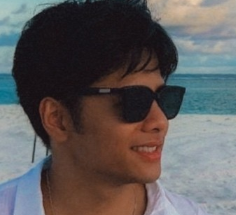
King Nigoza
How many artists were involved?
Recognizing the workload, I began assembling a high-caliber team of artists:
Animation – I brought in one of my long-time trusted collaborators, Taylor Aseere, an exceptional animator with her own strong team behind her. She immediately understood the creative needs and joined enthusiastically.
FX, Houdini, LookDev, Lighting & Comp – I contacted Jesse Thorp, a seasoned CG Supervisor skilled in Houdini, lighting, FX, and comp. His responsibilities included effects work, fur conversions from Houdini to Maya, and handling the Houdini-to-Maya V-Ray transition.
LookDev, Lighting & Comp – I added Victor Duncan (www.victorduncan.com), a long-time contact and incredibly strong LookDev/Lighting/Comp artist, along with King Nigoza (www.kingnigoza.com), another heavy hitter in these departments.
We also had support from Billy Levy, Rob Smith, Raship Trikha, Caitlin Schrader, Dave MacKenzie, Emily Donovan, Chris Meyers, Jerry Hsu, and Ethan Nasiff.
The result was a solid, specialized remote unit capable of tackling the project to a studio-level standard.
How did you split the work/responsibilities?
Taylor took care of all the animation, Jesse was FX, Victor was Lookdev/Lighting/Comp, and King Lighting/Comp. I initially set up the technical side of taking the yeti and aligning the Houdini V-Ray to Maya V-Ray asset setups, and then oversaw all the creative execution and supervision of the project.
Which other studios were involved in the campaign?
This campaign involved two major studios: JAMM for live-action VFX/CG integration, and Scholar for full CG animation for broadcast. This required significant asset sharing.\
My team and I were responsible exclusively for all content targeted for the large-format screens in New York and Los Angeles.
JAMM provided the yeti built in Houdini/V-Ray. We converted the entire asset into a Maya/V-Ray + Houdini hybrid workflow. Despite the technical challenges, we successfully recreated the yeti 1:1 in the new pipeline.

Scholar provided the mice and additional assets, which we integrated into assembling a secondary pipeline for the mice since they where originally created using XGen.

We carried out two pipelines, one focusing on the yeti and the other on the mice.
How did you organize the work? Did you work fully remotely?
Since this was a completely independent remote CG Animation pipeline with no central studio or internal render farm, so we built our system from scratch:
Google-Drive served as our central asset host;
Every artist mirrored identical folder structures locally to ensure consistency;
Strict discipline in organizing files was key; structured workflow ensured seamless transfers.
The team was distributed across the U.S., from Los Angeles to New York & New Jersey, and Canada. This remote pipeline, though challenging, was extremely efficient due to the team's discipline, structure, and clear communication.
Have you run such a big project before?
I have handled many large-scale projects throughout my career. Having experience in navigating big projects helped set forth a clear understanding of what and how to get this job organized and operating at its full potential.

Have you worked remotely before?
Yes, I have been operating remote setups even before covid. I first explored a working from home infrastructure in 2018/19.
Which software and renderers did you use?
Houdini, Maya, XGen, V-Ray and Nuke
What was it like collaborating directly with Target?
This was a direct-to-brand project, which meant:
Constant communication;
Efficient creative reviews;
Transparent work-in-progress updates;
A strong, supportive working relationship.
Target's team was exceptionally collaborative — positive, organized, and highly communicative. Their clarity and enthusiasm made the entire process feel fluid and productive. The experience was so smooth that working remotely felt indistinguishable from being in a full studio environment.
Can you highlight some shots or sequences you're particularly proud of? What made them challenging, unique, or interesting?
Creative choices were to ensure our quality in rendering style, and output matched those of JAMM and Scholar. Those studios are known to deliver some high-quality rendering, especially when dealing with furry characters.
In animation, the key exercise was how cute we could make the actions be — every time we looked at animation, it came down to all the little details each character is doing in one moment or another. You can stare at one of the pieces and see things you didn't see before. I think that is special.
What were the biggest challenges during the project?
I think our biggest challenge was the rendering, with such high-resolution needs, this became an instant challenge to overcome. We knew render times were going to be long, so there were moments when we kept looking at the time and how long some of these took to finish.
In the end, they all made it through!

How did you find GridMarkets?
The recommendation came from Jesse who had been using the service for years. We needed a cloud render solution that supported Houdini, Maya, and V-Ray. GridMarkets was able to accommodate all 3, so it was an easy choice from the start.
What did you render/simulate with GridMarkets?
We rendered all of our shots with GridMarkets. There was not one single shot that did not go through GridMarkets.
Can you share your experience with GridMarkets?
It is a very good solution, I think the biggest challenge is always the time to upload, any technical issues, and the instant support. Remote is already tricky at times, but having a solid support system that can quickly help support your needs as well as support the technical solution is always key. If you can support that, it makes it easier to use services like GridMarkets.
What advantages does GridMarkets bring to you?
Having a solution like GridMarkets was key in our setup. This project would not have happened without a solid cloud render solution.
How would you describe the final results?
Beyond the technical and organizational achievements, the work itself was beautiful. The fully CG holiday animations were charming, polished, and creatively rich. The look and feel of the campaign were vibrant, whimsical, and visually striking.
The team is proud of the outcome, both creatively and technically. The work was so impactful that we're planning a team trip to New York to watch the final pieces play publicly on the major screens — a celebration of everything accomplished together.

What does this project represent for you?
This project was a powerful demonstration of what's possible with the right people, clear planning, and strong collaboration, even without a traditional studio setup.
It proved that independent teams can deliver studio-level work at scale, under pressure, and with excellence.
The structure, teamwork, and creative vision all came together to produce one of the most rewarding experiences of the year. Working directly with Target was a highlight — a partnership that brought out the best in everyone involved.
By : GridMarkets marketing


Comments